Waiting to send

These are saved on your phone and will send by themselves when you have a signal. They only send while you’re signed in.

Skip to content

Old Testament

Questions about Genesis through Malachi.

Let us pray for you

I need prayer

Pray with Scripture

God’s Armory

Questions answered

What does Psalm 23 mean?

I've heard Psalm 23 read at funerals my whole life, but I want to understand what David actually meant. A few things confuse me:
  • Why does David compare the LORD to a shepherd?
  • What is the difference between the rod and the staff, and how do they "comfort"?
  • What does it mean to prepare a table "in the presence of mine enemies"?
  • Why anoint the head with oil?
  • Is "the house of the LORD for ever" talking about heaven?
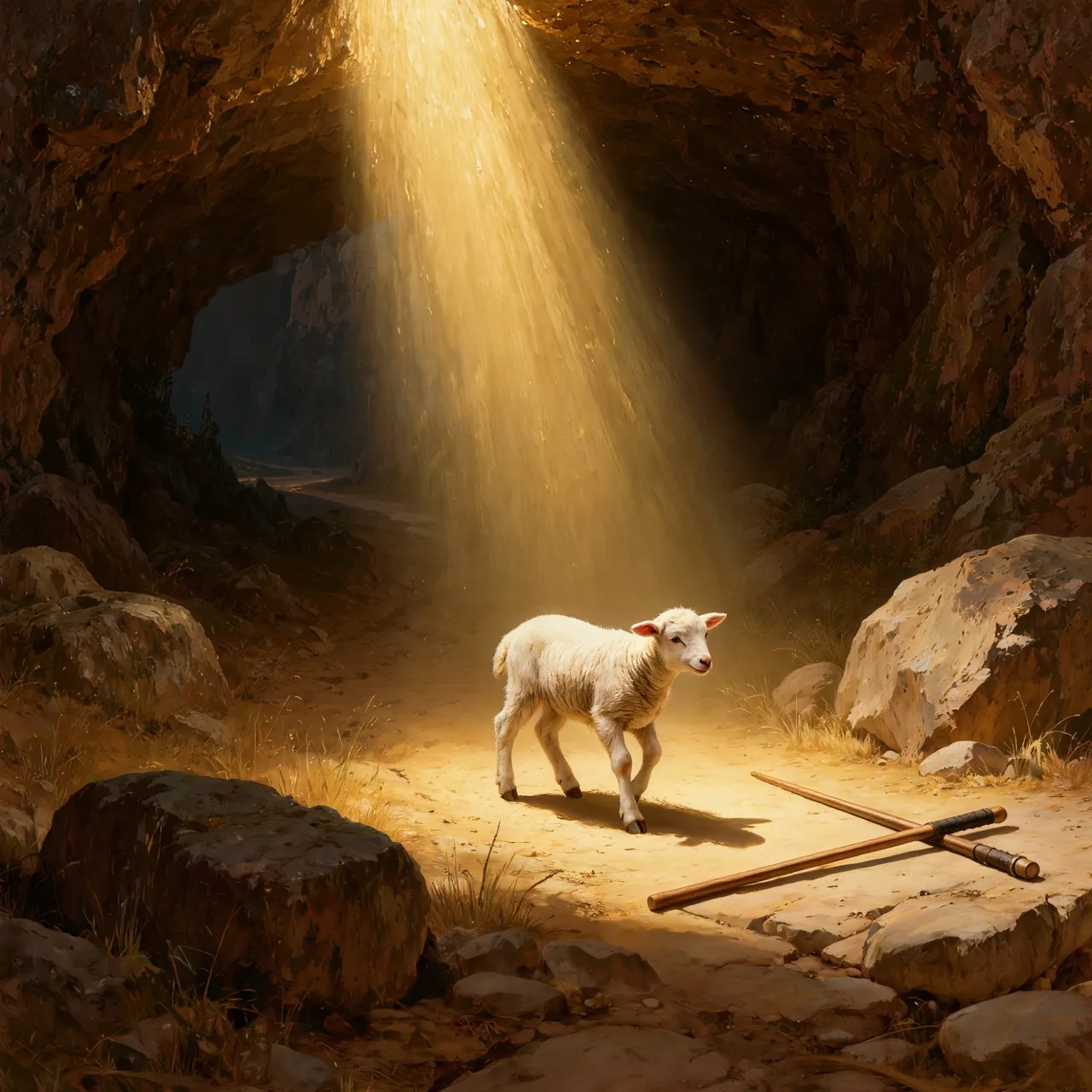
A lamb walking through a dark rocky place toward a beam of golden light, with a shepherd’s rod and staff lying in the light, illustrating Psalm 23:4 (KJV): “thy rod and thy staff they comfort me.”

Psalm 23

Top answer · Ahnjonee Tartt

What does Psalm 23 mean? It took effort to put into words what Psalm 23 means to me. My spirit grasps and understands it, but writing it down took more patience. I will answer your follow up questions first, then provide my interpretation of each verse.
  1. Why does David compare the LORD to a shepherd?
I think because David was a shepherd himself (), so he knew a shepherd feeds, guides, protects, and goes after the lost. Also, Jesus is our shepherd ().
  1. What is the difference between the rod and the staff, and how do they "comfort"?
As I understand, a rod protects and corrects, and a staff guides and supports. I'm His child, so even his correction comforts me because he cares for my wellbeing. He is protecting me from harm (, )
  1. What does it mean to prepare a table "in the presence of mine enemies"?
He provides for me and honors me while my enemies watch. (, )
  1. Why anoint the head with oil?
Oil anointing means being set apart. (, Jame 5:14) My interpretations by verse with selected Scriptures for Psalm 23 v.1: The Lord guides me and provides all I need. (, ) v.2: My rest and my walk with Him are sweet and calm. (, ) v.3: He is the only one who can restore my soul from sin, anguish, and heartbreak. Following Him, I will be righteous, and the glory goes to Him because He is my God, my leader, my everything . (, ) v.4: Although I walk through this wicked, fallen world, He is with me, protecting me. He is my defender and He comforts me. (, ) v.5: He provides for me, honors me, and fills me up, even with enemies watching. (, ) v.6: Since I walk in obedience, goodness and mercy follow me all the days of my life, and I will be with God for eternity. () I look forward to reading interpretations from others.
1 answer
Ahnjonee TarttCo-Founder

Where can I find scripture that answers the questions Asaph poses in verse 10? Also, your input on Psalm 74:9–11 is welcome.

Best answer · Jeremy Nittler

I will answer your first question first. It is found in Revelation. In chapter 16:9,11, and 21, they blasphemed or cursed the God of Heaven and wouldn’t repent. The refusal to repent is also found in Chapter 9, but it doesn’t say they cursed or blasphemed. Asaph’s question is answered in Revelation also. At some point everyone does stop blaspheming God and praises Jesus instead here: Then I heard every creature in heaven and on earth and under the earth and on the sea, and all that is in them, saying: “To him who sits on the throne and to the Lamb be praise and honor and glory and power, for ever and ever!” Also Paul tells us this: Therefore God exalted him to the highest place and gave him the name that is above every name, that at the name of Jesus every knee should bow, in heaven and on earth and under the earth, and every tongue acknowledge that Jesus Christ is Lord, to the glory of God the Father. , mirroring what happens in Revelation, outside of time and space.
2 answers

What does it mean to fear God?

Why is this verse telling us to fear God? Isn't that the opposite of love? I thought we were supposed to love God not fear him.
A green bush burning with fire yet not consumed, with sandals set aside on holy ground, illustrating Proverbs 9:10 (KJV): "The fear of the LORD is the beginning of wisdom."

Best answer · Jeremy Nittler

The simple answer here is the motivation of fear. Jesus tells us: “And do not fear those who kill the body but cannot kill the soul. But rather fear Him who is able to destroy both soul and body in Gehenna.” ‭‭Matthew‬ ‭10‬:‭28‬ ‭ Righteous fear has to do with valuing what God thinks of us high above what others think of us, and not fearing our circumstances. Unrighteous fear has to do with valuing others opinion of us more than God, or not understanding that everything that happens to us is under the umbrella of God’s perfect love. The bible never contradicts itself, but everything that is paradoxical usually has to do with our motives behind it. Unrighteous fear comes from believing lies of the enemy, righteous fear comes when we recognize we are believing the lie, renounce it, and replace it with God’s thuth from his Word.
1 answer
Old Testament· De Juan Tartt· Sep 27, 2026

Why was God going to kill Moses in Exodus 4:24-26?

Top answer · De Juan Tartt

The Lord had given Moses a divine assignment but Moses had not fulfilled his obligation by circumcising his son. Thus breaking the covenant between God Almighty and Abraham who Moses is descended from. ' As for me, behold, my covenant is with thee, and thou shalt be a father of many nations." Notice Moses wife (Zipporah) cut the foreskin of her son immediately after the LORD sought to kill Moses and this verse explains why: God says in ' This is my covenant, which ye shall keep, between me and you and thy seed after thee; Every man child among you shall be circumcised. And ye shall circumcise the flesh of your foreskin; and it shall be a token of the covenant betwixt me and you.'
Exodus 4:24–26 Zipporah about to circumcise her son.
2 answers
Old Testament· De Juan Tartt· Sep 27, 2026

What does Jeremiah 29:11 mean?

Top answer · Jeremy Nittler

is YHWH’s word to the Judean exiles in Babylon, not a general promise of personal success. The “plans” are the return after seventy years, already announced in . Verses 12–14 continue it: when they seek YHWH with all their heart, he will be found, and he will gather them from all the places he has driven them. It is the Deuteronomy pattern — exile as covenant curse (Deuteronomy 28), restoration after repentance (Deuteronomy 30) — applied to this generation and their children. Most of the adults who heard the letter would die in Babylon. The hope was national and generational, not an immediate personal turnaround. This was not meant to say no harm will come to believers. As a mirror though, does promise believers that God will work all evil out for good for the believer.
1 answer
Old Testament· De Juan Tartt· Sep 27, 2026

What does Psalm 91 mean?

Top answer · Jeremy Nittler

Dwelling in the “secret place” or “seter” in Hebrew is similar imagery to being covered with his feathers in verse 4, or the shelter of his wings in other places. David could have been talking about the Holy Place in the Tabernacle or future temple, where the anointed Cherubim spread their wings out, and you are under the shadow of the wings. The Angel of YHWH, or Elyon the invisible God is the Most High Angel, who sits between the Cherubim on the Throne or Mercy Seat in the temple of Heaven, or God’s Throne Room.
1 answer

Is exodus 13:6 still practiced today

Top answer · Jeremy Nittler

Great question Angela! This is a two part answer from me. The first is what Paul addressed to the Romans (gentiles): “Let not him who eats despise him who does not eat, and let not him who does not eat judge him who eats; for God has received him. Who are you to judge another’s servant? To his own master he stands or falls. Indeed, he will be made to stand, for God is able to make him stand. One person esteems one day above another; another esteems every day alike. Let each be fully convinced in his own mind. He who observes the day, observes it to the Lord; and he who does not observe the day, to the Lord he does not observe it. He who eats, eats to the Lord, for he gives God thanks; and he who does not eat, to the Lord he does not eat, and gives God thanks.” ‭‭Romans‬ ‭14‬:‭3‬-‭6‬ ‭NKJV I believe it is about personal convictions, what we eat, drink, wear, what day and how we worship and celebrate God. There is no absolute right or wrong way, as long as it is, in fact to the glory of our God, YHWH Yeshua Mashiach (our Lord Jesus Christ). The second key to this answer is from Jesus himself, when he says clean the inside of the cup, and the outside will be clean also. Holiness is purification of the heart. If the heart is pure, then the motivation for the outward behavior will be pure also. But if the heart is unclean then the motivation becomes unpure at best, evil at worst. When we allow Jesus to come into every area of our heart, (I stand at the door and knock…) we hide his Words in our hearts, by breaking agreements with lies we have made with the Devil, then we will be able to hear the Shepherd’s voice more clearly. Because Jesus did say “My sheep hear my voice.” One day Jesus may tell us to eat unleavened bread, fast, and abstain, and another to eat drink and be merry. The key here is hearing and following His voice. We are not to judge or worry about others not worshipping God in the same manner as others. I have much to say about that but it will take us down yet another rabbit hole.
1 answer
Old Testament· De Juan Tartt· Oct 30, 2026

What does "iron sharpeneth iron" mean?

People quote this verse about friendship and accountability, but I want to understand what Solomon really meant. A few things confuse me:
  • How does one piece of iron actually sharpen another?
  • What does "the countenance of his friend" mean?
  • Does sharpening mean my friends should correct me, encourage me, or both?
  • Can this verse apply to marriage, church, or the workplace, or only to close friends?
  • What does it look like when a friendship is NOT sharpening you?
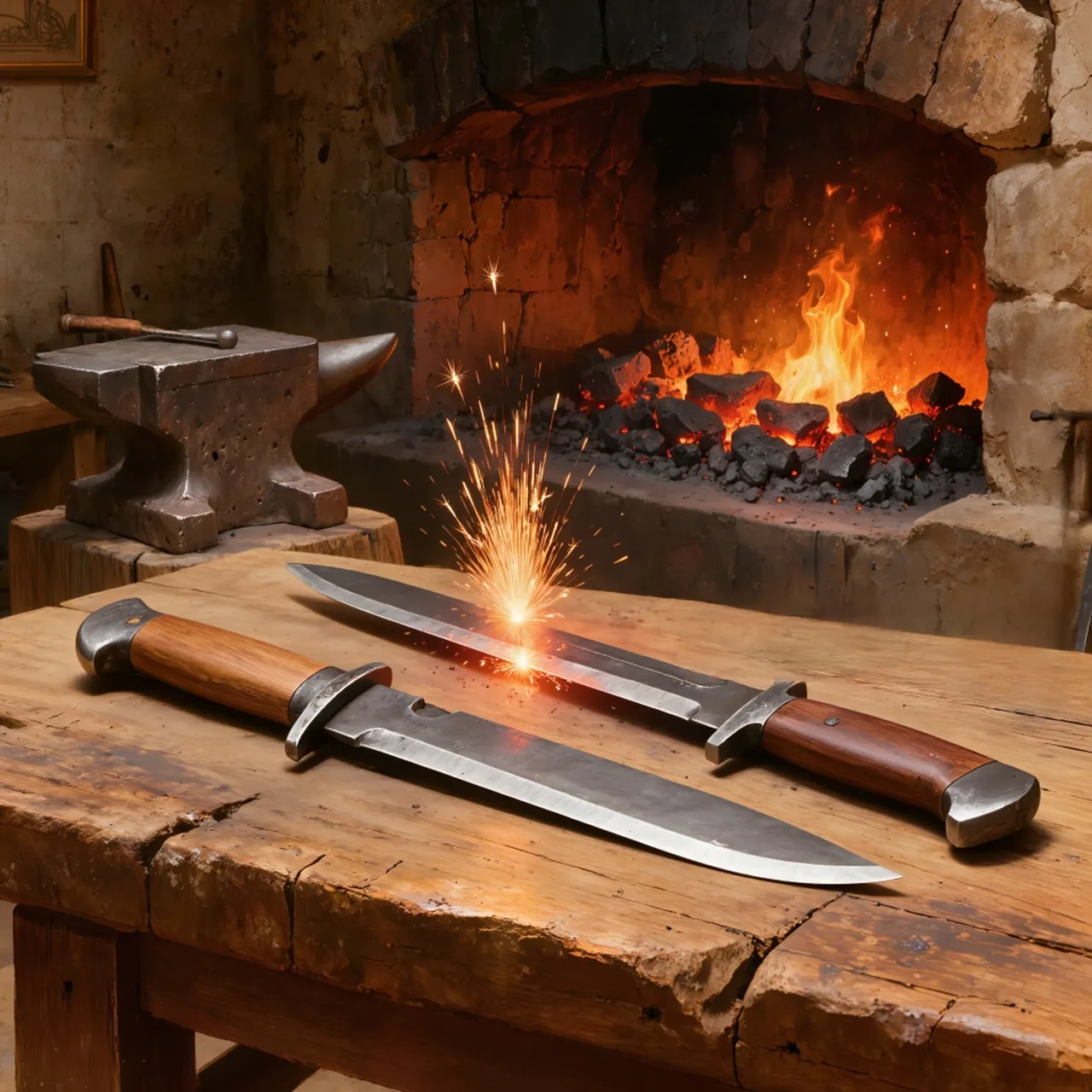
Two iron blades meeting with sparks flying in an ancient forge, illustrating Proverbs 27:17 (KJV): “Iron sharpeneth iron; so a man sharpeneth the countenance of his friend.”

Top answer · Jeremy Nittler

Great questions brother! I would say whoever challenges you sharpens you. The verse says, as iron sharpens iron, one man sharpens another. It doesn’t say “friend”. It says “man” which means all mankind. It doesn’t exclude those who are not friends. Those who challenge me the most are the ones who sharpen me the most. The raw truth is required for this to take place. Lies hinder and hide this process. God uses everyone and everything to teach us the lessons he wants to teach us and refine us into who he wants us to become. Both now and on judgement day, what defines us is what happens to us in the fire. The same fire of judgment affects the righteous and the wicked differently. A great example of this is Shadrach, Meshach, and Abednego. When they were thrown in the fire, their chains fell off. Their refinement brought their freedom. But the same fire consumed and destroyed those who threw them in. Sharpening involves friction and friction turns into fire.
1 answer
Old Testament· De Juan Tartt· Oct 30, 2026

What does "be still, and know that I am God" mean?

I see "be still, and know that I am God" on wall art and coffee mugs, but I want to know what it means in the Bible. A few things confuse me:
  • Does "be still" mean to be quiet and calm, or does it mean to stop fighting?
  • Verse 9 talks about God ending wars. How does that connect to verse 10?
  • Who is God speaking to here, His people or the nations?
  • What does "Selah" mean at the end of verse 11?
  • How can I "be still" when I'm going through something hard?
A man sits quietly beside a still mountain lake at dawn, resting in God as Psalm 46:10 says, "Be still, and know that I am God."

Top answer · Jeremy Nittler

Many great questions you asked De Juan, my brother. I will try to address them separately. What I believe is, in order to be still and know He is God, means it has to be intentional. There are so many distractions in our lives that compete for attention. In order to come into YHWH’s presence, we must make him a priority. The concept of being still to me means we must put everything else down and make God our number one priority. It is the opposite of busy. I have heard an acronym for BUSY, Buried Under Satan’s Yoke. Satan doesn’t necessarily have to tempt us to sin against God, he just has to distract us, get us to look in any direction and take our eyes off of Jesus. Because when we take our eyes off of Jesus, we focus on the storm around us. And this will cause us to become fearful and sink in the depths of the Sea (the world), like Peter did. But as long as we look at Jesus and not at the storm all around us, we will walk on the water, and not be affected by the storm. Once again just like Peter. Another good bible example is Mary and Martha. Martha was making business a priority over Jesus. While Mary was sitting at the feet of the Master. Jesus told Martha, only one thing is needful (sitting at His feet, abiding in Him.) and Jesus said seek first His Kingdom, and everything else will be provided for, and we will have the peace that passes all understanding (paraphrasing from multiple verses).
5 answers

How God brought others through

Devotional· De Juan Tartt· 1d ago

Frozen in the Past: How One Glance Can Paralyze Your Future

There’s a verse in Genesis that I used to gloss over. But now it hits me hard: “But his wife looked back from behind him, and she became a pillar of salt.” — (KJV) One glance, one moment of looking back—and she was gone. It wasn’t just about disobeying God; it was about where her heart was anchored. And maybe, if we’re honest, we can relate more than we care to admit. The Pain of Leaving People Behind Let’s rewind. In Genesis 19, God is about to destroy Sodom and Gomorrah. Two angels come to warn Lot, telling him to flee with his wife and daughters. But when Lot tries to convince his sons-in-law, the Bible says: “And Lot went out, and spake unto his sons in law… and said, Up, get you out of this place; for the LORD will destroy this city. But he seemed as one that mocked unto his sons in law.” — (KJV) They didn’t listen. Can you imagine that? You’re running for your life, and your own family stays behind. Lot’s wife wasn’t just leaving behind a city; she was leaving behind people she loved—possibly daughters, sons-in-law, or even grandchildren. She wasn’t just looking back at sin; she was looking back at who she couldn’t save. And in that moment, she couldn’t keep moving forward. I’ve Looked Back Too This hit me hard because I’ve been there. Maybe you have too. There’s pain in obeying God when it costs you relationships. Friendships that no longer walk with you. A family that doesn’t understand the calling on your life. And even when we know we’re following God, sometimes our hearts still ache for those who won’t come with us. But here’s what I’m learning: we’re not called to stay behind out of guilt. We’re called to move forward in obedience and trust, believing that God loves those people even more than we do. Keep Walking Anyway Lot didn’t stop. He didn’t turn back. The angels grabbed his hand and pulled him forward (). And sometimes, that’s what it takes. Sometimes we need divine strength to keep walking when everything in us wants to turn around. Even Jesus said: “Remember Lot’s wife.” — (KJV) A whole sermon in four words. Grace for the Grief Here’s the grace in it: God sees our grief. He knows what it costs to walk away from the old. But His promise is always ahead—never behind. So today, even with the ache, I’m choosing not to look back. I’m praying for those who stayed behind, but I’m trusting God with their story. Watch & Read More YouTube Short: “Seek First the Kingdom of God – ” (https://youtube.com/shorts/4HdPfyQL3XA) Related post: Faith That Moves Mountains: What Jesus Really Meant in [LINK: add after it is posted] YouTube Short: “Pray Believing You Have Received – ” (https://youtube.com/shorts/MQbo-uvSePo) Have you had to walk away from something—or someone—to follow God? You’re not alone. And friend, you’re not being harsh. You’re being obedient. Let’s keep moving, not by strength… but guided by grace.
A woman in a robe and head covering looking back over her shoulder at a burning city under a fiery sky, illustrating Lot's wife in Genesis 19:26.

See all devotionals

I have a question about this